 ultimate-guide
How to Become a Mechanic in Australia: 2026 Career Guide
Table of Contents
- What Does a Motor Mechanic Do in Australia?
- Motor Mechanic Apprenticeship Duration and How to Get Started
- Certificate III in Light Vehicle Mechanical Technology: The Core Qualification
- Automotive Electrical Career Path for Beginners: Where to Start
- Tools, Costs and What Employers Expect from Apprentices
- Career Progression and Salary Expectations for Qualified Mechanics
- How to Become a Mechanic in Australia: Next Steps with Swann College
- Frequently Asked Questions
Last Updated: September 26, 2026
What Does a Motor Mechanic Do in Australia?
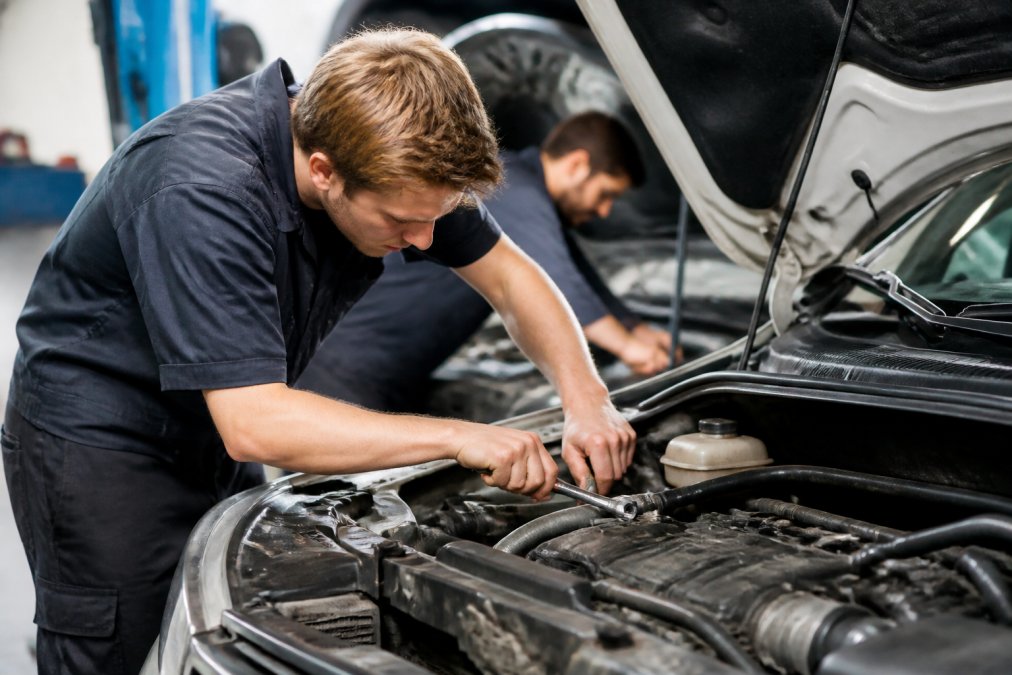
A motor mechanic is a skilled tradesperson who diagnoses, repairs and maintains the mechanical and electrical systems of cars, utes, trucks and other motor vehicles. The role combines hands-on work with real technical thinking: reading fault codes, tracing wiring, testing components and explaining the fix to a customer.

This guide from Swann College covers how to become a mechanic in Australia, from apprenticeship basics through to qualification and pay. If you want a trade that will not be automated away next year, the pathway is clearer than most people think.
The work spans engine management, transmission, braking systems, steering and suspension, and increasingly automotive electrical and high-voltage systems.
Motor Mechanic Apprenticeship Duration and How to Get Started
A motor mechanic apprenticeship in Australia typically runs four years full-time, combining paid on-the-job training with structured study at a Registered Training Organisation. You earn while you learn, and your employer signs off on your practical hours.
To get started, the usual route looks like this:
- Complete Year 10 or equivalent, with maths and English being the most useful subjects
- Find an employer willing to take you on as an apprentice
- Enrol in the Certificate III qualification that matches the vehicles you will work on
- Register your training contract with your state or territory training authority
- Build your practical hours and complete your competency assessments
Certificate III in Light Vehicle Mechanical Technology: The Core Qualification
The Certificate III in Light Vehicle Mechanical Technology is the trade qualification most light vehicle mechanics complete. It is nationally accredited, so it is recognised by employers right across the country.
Automotive Electrical Career Path for Beginners: Where to Start
The automotive electrical career path for beginners usually starts in the same place as general mechanics: a Certificate III, then specialisation. Automotive electrical is one of the fastest-growing areas of the trade, because every new vehicle carries more sensors, modules and wiring.
Where to start:
- Build your base with a light vehicle qualification, so you understand the whole vehicle
- Focus your electives on electrical and electronic systems where your provider offers them
- Get comfortable with diagnostic tools and wiring diagrams early
- Consider a short course in air conditioning or high-voltage systems once you are qualified
Tools, Costs and What Employers Expect from Apprentices
A realistic budget looks like this:
What you need | Typical outlay | When | Why it matters |
|---|---|---|---|
Basic hand tool set (spanners, sockets, screwdrivers, pliers) | $300-$800 | Before you start | Employers expect you to arrive ready to work |
Torque wrench and socket set | $150-$400 | First year | Used on almost every job; a cheap one will not hold calibration |
Tool chest or roll cab | $400-$1,500 | First year | Keeps your kit organised and portable between bays |
Safety gear (glasses, boots, gloves) | $150-$350 | Day one | Non-negotiable on any workshop floor |
Diagnostic scan tool | $500-$3,000+ | As skills grow | Essential for modern fault-finding; many workshops supply the high-end units |
Specialist kit (air con gauges, EV PPE) | Varies | Once qualified | Only buy when you specialise |
How apprentices actually fund it
- Wage while you learn. An apprenticeship is a paid job, so tool purchases come out of a real income. Many workshops also reimburse or subsidise tools the apprentice uses on the job.
- Tool allowance. Some enterprise agreements and awards include a tool allowance for apprentices. Check your contract or ask your employer directly.
- Trade credit and lay-by. Most trade suppliers offer trade accounts, and many run interest-free periods for apprentices. Ask before you assume you need the cash upfront.
- Government support. State and territory governments run apprenticeship support programs that can include tool and equipment subsidies, travel allowances and mentoring. The exact schemes, eligibility and amounts differ by jurisdiction and change over time, so check your state or territory training authority's website for the current offering. The Australian Apprenticeships portal is the central starting point.
- Second-hand market. Quality second-hand tools from retiring tradespeople are common and often excellent value. Buy the safety-critical items new.
What employers actually look for in a first-year apprentice
- Punctuality and reliability. Arriving on time, every day, is the single strongest signal that you are worth investing four years in.
- Willingness to listen and take direction. You will be told to do things a certain way. Do it that way first, then ask why.
- Respect for the workshop and the customer's vehicle. Clean up your bay, put tools back, do not lean on panels.
- Basic mechanical aptitude. Knowing which way a thread turns matters more than prior experience.
- A driver's licence. Many workshops require it, and it makes you far more employable.
- Genuine interest in the trade. Being able to talk about a car you have worked on shows you are there for the right reasons.
Career Progression and Salary Expectations for Qualified Mechanics
Typical progression and indicative pay
Stage | Typical role | Indicative annual salary |
|---|---|---|
Apprentice | Learning on the job | Award-based apprentice wage, rising each year |
Qualified technician | General servicing and repairs | $55,000-$75,000 |
Specialist technician | Automotive electrical, air conditioning, transmission, EV/hybrid | $70,000-$95,000 |
Senior or diagnostic technician | The person the workshop calls when nobody else can find the fault | $85,000-$110,000 |
Workshop foreman or manager | Running the floor, quoting jobs, supervising apprentices | $95,000-$130,000 |
Business owner | Your own workshop or mobile mechanic operation | Varies widely with scale |
Specialisations that command more
- Automotive electrical and diagnostics. The fastest-growing area, because every new vehicle carries more sensors, modules and wiring.
- Electric and hybrid vehicle systems. High-voltage certification is in demand and relatively scarce among technicians.
- Air conditioning. A licensed activity in most jurisdictions, so holding the ticket opens doors.
- Heavy vehicle and diesel. Trucks, buses and earthmoving equipment, often higher pay and strong demand.
- Performance and motorsport. Competitive to enter, but a clear pathway for the right person.
Career-changers: Recognition of Prior Learning
How RPL typically works:
- Talk to an RTO that delivers the qualification you want. Not all offer RPL for every course.
- Provide evidence. This usually includes a portfolio of work history, employer references, photos or job records, and sometimes a practical assessment.
- Undergo a competency conversation or gap assessment. The assessor maps your existing skills against the units of competency.
- Complete any gap training. You only study the units you cannot already demonstrate.
- Receive the qualification. Once all units are met, you are awarded the full nationally recognised certificate.
International students and skilled migration
How to Become a Mechanic in Australia: Next Steps with Swann College
If you are serious about how to become a mechanic in Australia, get into a workshop and start learning on real vehicles. Theory alone will not make you employable, and online-only courses rarely produce job-ready tradespeople.
Frequently Asked Questions
How long does it take to become a mechanic in Australia?
A motor mechanic apprenticeship duration is typically four years full-time, combining on-the-job training with off-the-job study. You complete a Certificate III in Light Vehicle Mechanical Technology during this time. Some providers offer competency-based pathways, meaning you can finish faster if you demonstrate the required skills ahead of schedule. Part-time arrangements are also available for mature-age apprentices already working in the trade.
Is 30 too late to become a mechanic?
No. Many people start an automotive electrical career path for beginners in their 30s, 40s or later. Employers value reliability, communication skills and a strong work ethic, which older apprentices often bring. Mature-age apprenticeships exist specifically for career changers, and your prior experience in any hands-on role can count toward your training. The main requirement is a genuine interest in mechanical systems and a willingness to learn.
What qualifications do I need to work as a mechanic?
The standard entry point is a Certificate III in Light Vehicle Mechanical Technology, completed through an Australian Apprenticeship. This trade qualification is nationally recognised and required for most mechanic roles. For specialisations like automotive electrical or air conditioning, you complete additional short courses. Licensing requirements vary by state and territory for certain tasks such as air conditioning refrigerant handling, so check with your local regulator.
How much is a mechanic paid in Australia?
Pay depends on your qualification level, experience and location. Apprentice wages are set by the relevant industrial award and increase each year of your training. Qualified motor mechanics typically earn a full-time adult wage, with higher rates for those holding additional certifications in heavy vehicle, automotive electrical or air conditioning work. Overtime, shift allowances and specialisation can increase your earnings further. Check the Fair Work Ombudsman for current award rates.
The trade is short of people who can actually diagnose a fault, not just swap parts, and that shortage is your opportunity. Swann College offers nationally accredited courses, training facilities that mirror a working workshop, and trainers who know the modern vehicle inside out. Get started with Swann College and build the practical skills that employers are actively looking for.