 how-to
Automotive Air Conditioning Certification Course Australia
Table of Contents
- Why Automotive Air Conditioning Certification Matters in Australia
- AUR20220 Certificate II in Automotive Air Conditioning Technology Explained
- Automotive Air Conditioning Course Requirements and Entry Prerequisites
- Automotive Air Conditioning Course Duration and Delivery Options
- How to Get Your Automotive Air Conditioning Licence: Step by Step
- What You'll Need
- Step 1: Confirm the qualification you need
- Step 2: Enrol with a registered training organisation
- Step 3: Complete the training and assessment
- Step 4: Receive your statement of attainment
- Step 5: Apply for your refrigerant handling licence through the ARC
- Step 6: Pay the fee and wait for processing
- Step 7: Renew before it expires
- What the Course Assessment Involves and How to Prepare
- Choosing the Right Automotive Air Conditioning Certification Course Provider
- Conclusion: Your Next Step Toward Certification
- Frequently Asked Questions
Last Updated: October 12, 2026
Why Automotive Air Conditioning Certification Matters in Australia
Refrigerant handling is regulated work, and unlicensed handling carries real penalties. That single fact drives most enrolments in an automotive air conditioning certification course in Australia.
At Swann College, we deliver nationally accredited automotive training through a Registered Training Organisation structure, with campuses in Sydney and Adelaide and a workshop that mirrors a real workplace setting.
Below, we break down the qualification, the entry requirements, the duration, the assessment, and the exact pathway to your licence.
AUR20220 Certificate II in Automotive Air Conditioning Technology Explained
The AUR20220 Certificate II in Automotive Air Conditioning Technology is the nationally recognised qualification for technicians who service and repair vehicle air conditioning systems. It sits within the automotive retail, service and repair training package and is delivered by registered training organisations across the country.
The qualification covers refrigerant handling, system components, servicing, testing, diagnosis and repair across cars and heavy vehicles.
What Changed From AUR20218 to AUR20220
The shift from AUR20218 to AUR20220 reflects updates to the training package rather than a change in what technicians actually do.
If you hold the older AUR20218, your qualification remains recognised. Providers and employers generally treat both codes as evidence of the same competency. What matters is that your training was nationally recognised and your assessment covered refrigerant handling and system servicing.
Automotive Air Conditioning Course Requirements and Entry Prerequisites
Entry requirements for an automotive air conditioning course are usually straightforward: you need to be able to read and interpret technical information, work safely in a workshop, and hold or be working toward a relevant automotive trade qualification.
A common approach is to check three things before enrolling:
- Whether the provider requires a current automotive trade qualification or accepts industry experience
- Whether you need a White Card or general construction induction training for workshop access
- Whether language, literacy and numeracy screening applies to you
Recognition of prior learning and recognition of current competency are both available at most registered training organisations. If you have years of hands-on air conditioning experience, this can shorten your course considerably.
Automotive Air Conditioning Course Duration and Delivery Options
Course duration varies by provider and by how much recognition of prior learning you claim. A full Certificate II in Automotive Air Conditioning Technology is typically delivered over a number of weeks of structured training, while experienced technicians who gain recognition for existing skills can complete the gap training faster.
Delivery options usually include:
| Delivery Mode | Best For | Typical Structure |
|---|---|---|
| Face-to-face workshop | School leavers and career changers | Full-time, structured days on campus |
| Part-time or evening | Technicians already working | Weekly sessions around shift work |
| Recognition of prior learning | Experienced technicians | Assessment only, minimal attendance |
| Regional or blended | Students outside metro areas | Mixed online theory with block practical |
If you work full-time in a workshop, ask specifically about evening or part-time options before you assume you have to take leave. Many providers structure air conditioning training around the people who most need it, which is working technicians.
How to Get Your Automotive Air Conditioning Licence: Step by Step
Most course pages stop at the qualification. The part they leave out is the bit that actually lets you work: the refrigerant handling licence. In Australia, refrigerant handling authorisation is issued through the Australian Refrigeration Council (ARC) under the Ozone Protection and Synthetic Greenhouse Gas Management Regulations, and the qualification alone does not give you that authorisation.
The sequence below is the one we walk students through, from enrolment to a licence in hand.
Total Time: Varies by provider, prior experience and ARC processing Difficulty: Intermediate
What You'll Need
- A nationally recognised qualification or statement of attainment covering refrigerant handling
- Identification documents (100 points) for your ARC licence application
- Evidence of any prior training or recognition of current competency
- A passport-style photo if applying for a physical card
Step 1: Confirm the qualification you need
Check which qualification your state or territory regulator and the ARC require for the refrigerant handling work you intend to do. The qualification is national, but the licensing requirement is administered nationally through the ARC, so confirm the current rule before you enrol.
Step 2: Enrol with a registered training organisation
Choose an RTO delivering the current AUR20220 qualification. Confirm the course includes practical assessment on live air conditioning systems, not theory only. Ask the provider whether their statement of attainment is issued in a format the ARC accepts for licence applications.
Step 3: Complete the training and assessment
You will be assessed on refrigerant recovery, system servicing, testing, diagnosis and safe work practices. Competency is demonstrated practically, not by exam alone. The units that matter most for licensing are the ones covering refrigerant handling and recovery.
Step 4: Receive your statement of attainment
Once assessed as competent, your RTO issues a statement of attainment. This is the document your ARC licence application depends on. Keep the original and a digital copy.
Step 5: Apply for your refrigerant handling licence through the ARC
Lodge your application with the Australian Refrigeration Council. The ARC issues the refrigerant handling licence (often called an ARCtick licence) that authorises you to handle refrigerant (Refrigerant Handling Licence). There are different licence classes depending on the work you do, so check which class matches automotive air conditioning work before you apply.
Step 6: Pay the fee and wait for processing
The ARC charges an application fee, and the licence is typically issued for a set period before it needs renewing (Licence Application Fees). Fees and processing times change, so confirm the current amount directly with the ARC rather than relying on a course provider's estimate.
Step 7: Renew before it expires
Refrigerant handling licences have an expiry date. Set a reminder well before it lapses, because working on refrigerant without a current licence is the same compliance problem as never having held one.
Expected Result: A nationally recognised qualification plus an ARC refrigerant handling licence that authorises you to legally handle refrigerant in vehicle air conditioning systems.
What the Course Assessment Involves and How to Prepare
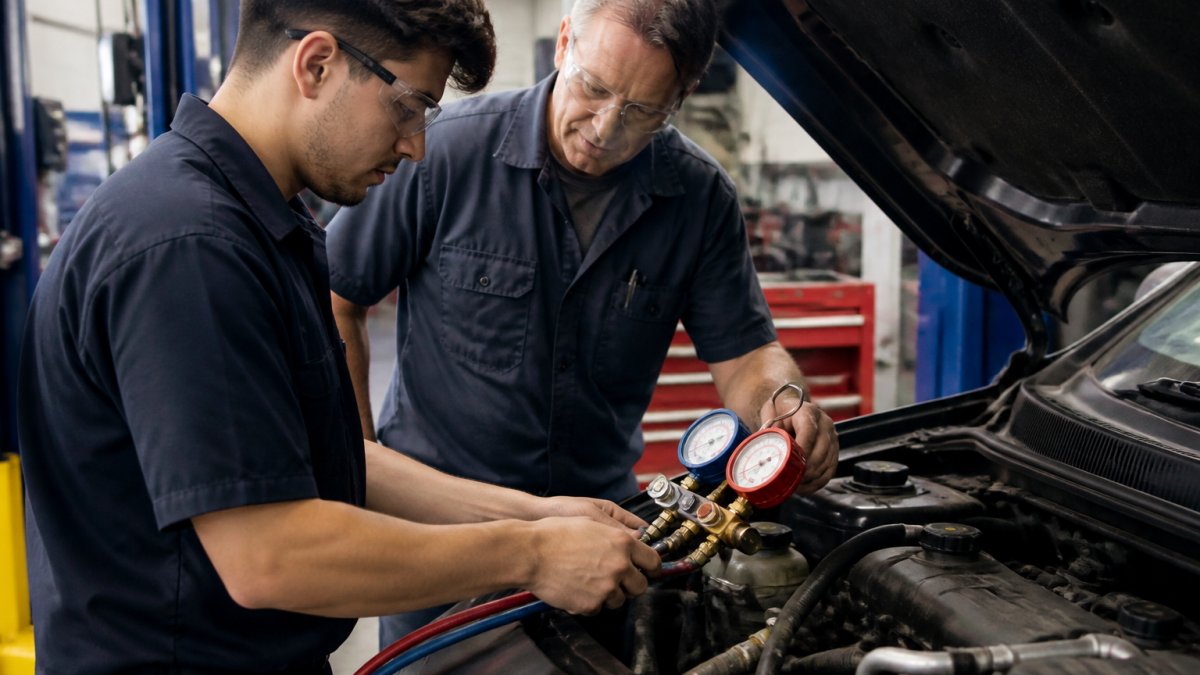
Assessment for the Certificate II is competency-based, which means you are judged on what you can do, not on how well you sit an exam.
The practical tasks you should expect to be assessed on include:
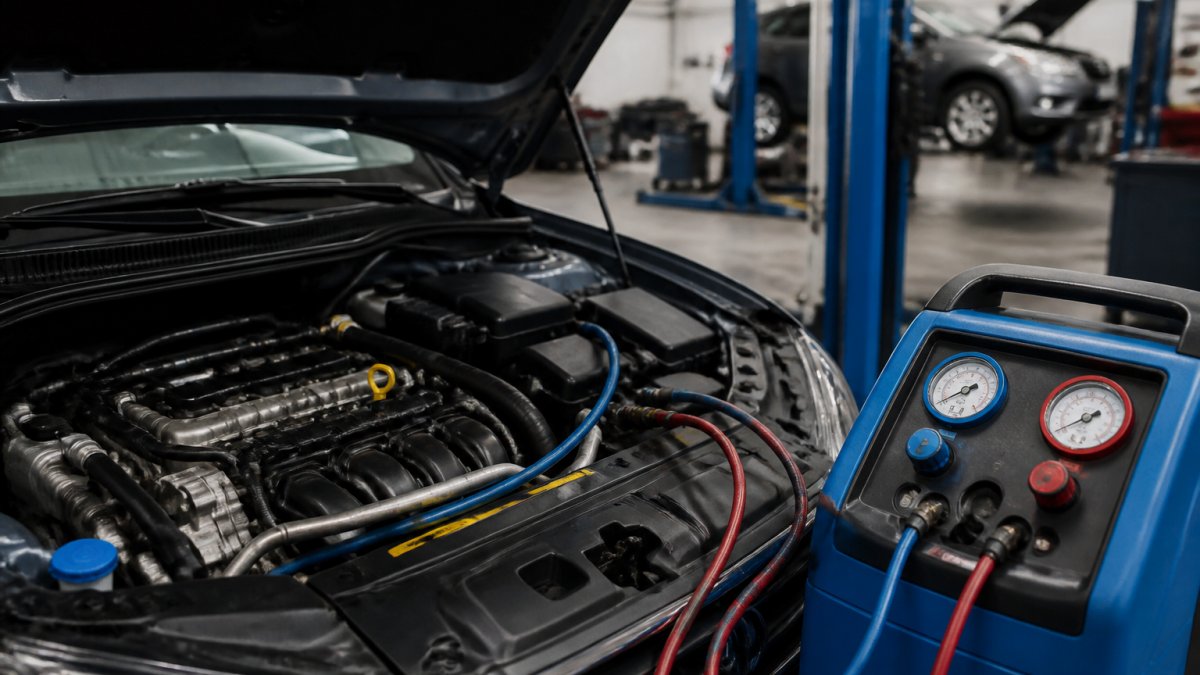
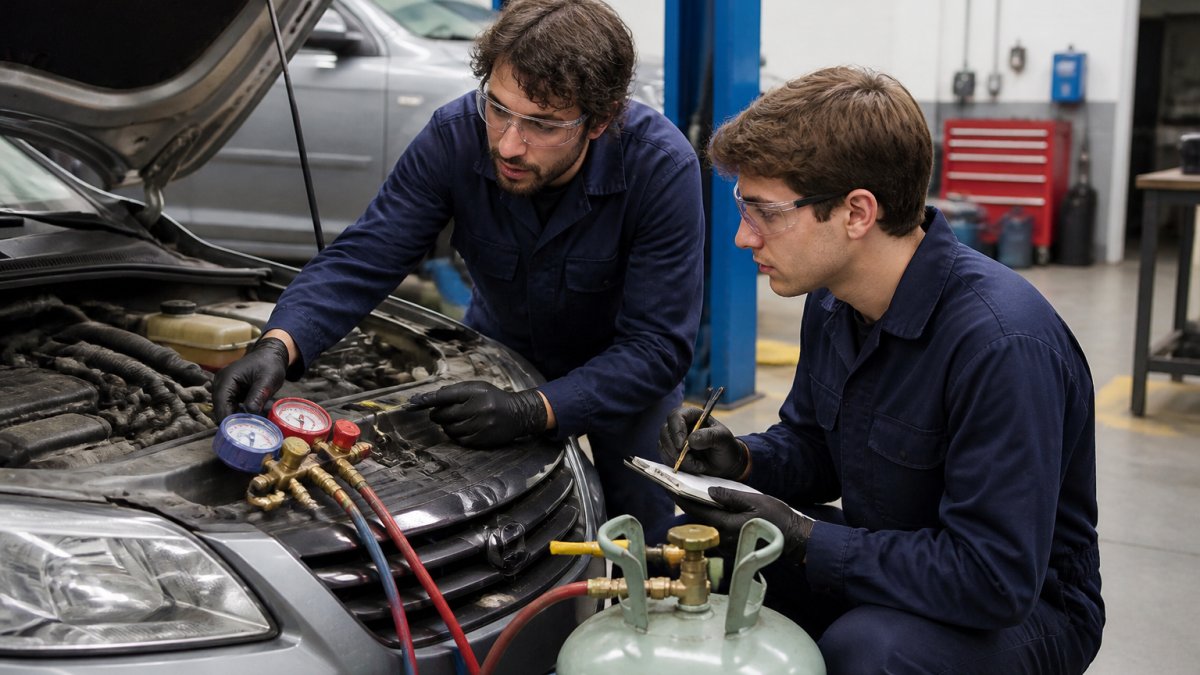
- Recovering, recycling and charging refrigerant using manifold gauges and a recovery machine
- Identifying refrigerant type and checking for contamination
- Pressure testing and leak testing a system
- Evacuating a system and checking it holds vacuum
- Diagnosing common faults such as a failed compressor, blocked expansion valve or leaking condenser
- Replacing components such as the receiver-drier, TX valve and hoses
- Reading and interpreting wiring diagrams and system performance data
- Applying safe work practices, including PPE, cylinder handling and ventilation
The theory components cover automotive skills, technical knowledge and workplace safety. The practical components are where most students either shine or struggle, and hands-on time in a real workshop setting is what separates a confident technician from one who has only watched videos.
How to Prepare
Preparation is mostly practical. If you already work in the trade, keep notes on the air conditioning jobs you handle and the faults you diagnose. Recognition of prior learning assessors want specific examples, not general claims.
If you are new to the trade, focus on understanding system components and refrigerant types before you start, because the practical assessment moves quickly.
What Evidence You Will Need to Provide
For recognition of prior learning, most RTOs will ask for a portfolio that may include:
- Employer references or a letter confirming your role and duties
- Job records or service sheets showing air conditioning work
- Photos or video of you performing refrigerant handling tasks
- A current resume and any prior statements of attainment
For direct assessment, you will complete the practical tasks under observation and answer written or verbal questions to confirm the knowledge behind the skill.
Choosing the Right Automotive Air Conditioning Certification Course Provider
Provider choice matters more than most students expect. The qualification code is standardised, but the training quality is not.
Look for a provider that offers a workshop environment reflecting a real workplace, trainers with current industry experience, and a clear explanation of what the assessment involves.
At Swann College, our curriculum is developed in association with the Institute of Automotive Mechanical Engineers, and our campuses in Sydney and Adelaide are accessible by public transport.
Conclusion: Your Next Step Toward Certification
The gap between wanting to work on vehicle air conditioning and being licensed to do it comes down to one decision: choosing a provider that delivers the current qualification with real practical assessment.
Swann College delivers nationally accredited automotive training as a Registered Training Organisation, with a workshop that reflects a real workplace, training aligned to current industry practice through our association with the Institute of Automotive Mechanical Engineers, and campuses in Sydney and Adelaide.
Frequently Asked Questions
What is the required licence for automotive air conditioning work in Australia?
You need a refrigerant handling licence issued by the Australian Refrigeration Council (ARC) to legally handle refrigerants in automotive air conditioning systems. To qualify, you must complete a nationally recognised course like the AUR20220 Certificate II in Automotive Air Conditioning Technology through a registered training organisation. The course covers safe refrigerant handling, system servicing, and environmental requirements. Without this licence, you cannot legally purchase or handle refrigerants, and you risk fines and environmental damage.
Can I work on automotive air conditioning systems without a qualification?
No. In Australia, anyone handling refrigerants must hold a current refrigerant handling licence from the Australian Refrigeration Council. Working without one is illegal and carries penalties. Beyond the legal requirement, employers in the automotive industry expect technicians to hold nationally recognised qualifications. Completing the AUR20220 Certificate II gives you both the practical skills and the compliance documentation employers look for. It also covers safe work practices and environmental responsibilities that protect you and your customers.
How long does an automotive air conditioning course take?
Course duration varies by provider and delivery mode. Many registered training organisations deliver the AUR20220 Certificate II in Automotive Air Conditioning Technology over a few weeks of full-time study or several months part-time. Some offer intensive block delivery, while others run evening or weekend sessions for working technicians. Before enrolling, confirm the exact schedule, attendance requirements, and whether any recognition of prior learning (RPL) can shorten your timeframe. Part-time options suit mechanics who need certification without leaving their current job.
What should I check before enrolling in an automotive air conditioning course?
Confirm the provider is a registered training organisation delivering nationally recognised training under the AUR Automotive Retail, Service and Repair Training Package. Check that the qualification code is current, as AUR20218 has been superseded by AUR20220. Ask about the workshop facilities, whether training is hands-on with real vehicles, and what assessment involves. Also clarify fees, any material costs, and whether the course includes the refrigerant handling licence application process. Visiting the campus or speaking to trainers helps you judge whether the training matches real workshop conditions.