 Ultimate guide
The Complete Guide to EV Maintenance Training for Mechanics
Last Updated: November 12, 2026
Quick Summary
EV maintenance training for mechanics starts with high-voltage safety training before any practical work, then adds the battery electric vehicle inspection and servicing skill set to get you onto EV jobs quickly. Qualified light vehicle technicians can build on an existing Certificate III rather than starting a full qualification from scratch.
- EVs have fewer wear items, so work shifts to inspection, software diagnosis and high-voltage checks.
- Baseline EV equipment includes insulated tools, a CAT III-rated multimeter, PPE and BMS diagnostic software.
- The battery electric vehicle inspection and servicing skill set is the shortest recognised pathway for qualified mechanics.
- Judge an electric vehicle servicing course on national accreditation, hands-on delivery and current equipment.
- Skipping straight to advanced diagnostics without the safety foundation is the most common route to a bad outcome.
Table of Contents
- How EV Maintenance Differs from Traditional Vehicle Servicing
- The Battery Electric Vehicle Inspection and Servicing Skill Set
- EV High Voltage Safety Training: What You Must Know Before Touching a Battery
- AUR32721 Certificate III in Automotive Electric Vehicle Technology
- Choosing an Electric Vehicle Servicing Course for Qualified Mechanics
- Building Your EV Maintenance Training Roadmap
- Common Mistakes Mechanics Make When Moving into EV Work
- Enrol in EV Maintenance Training at Swann College
- Frequently Asked Questions
How EV Maintenance Differs from Traditional Vehicle Servicing
EV maintenance training for mechanics starts with unlearning part of what you already know. The fundamentals of workshop practice carry over, but the systems under the bonnet do not, and the risks are different in kind rather than degree. This guide walks through what changes, which qualifications matter, and how to build a training path that employers actually recognise.
The biggest shift is that an electric drivetrain has far fewer serviceable wear items than a combustion engine. No oil changes, no spark plugs, no exhaust system, no timing belt. What replaces that routine work is inspection, software diagnosis, and high-voltage system checks that demand specific training before you touch anything.
What Changes Under the Bonnet
A battery electric vehicle replaces the engine, gearbox and fuel system with a battery pack, inverter, electric motor and a network of high-voltage cabling. That changes your diagnostic approach entirely. Faults are often electronic rather than mechanical, so you read live data and fault codes before you reach for a spanner.
Thermal management becomes a core service item. Battery packs and motors rely on cooling circuits that need inspection and, in some designs, fluid servicing. Brake work also shifts: regenerative braking means friction brakes wear more slowly but corrode more readily from lack of use, so inspection matters more than replacement.
New Tools and Diagnostic Equipment
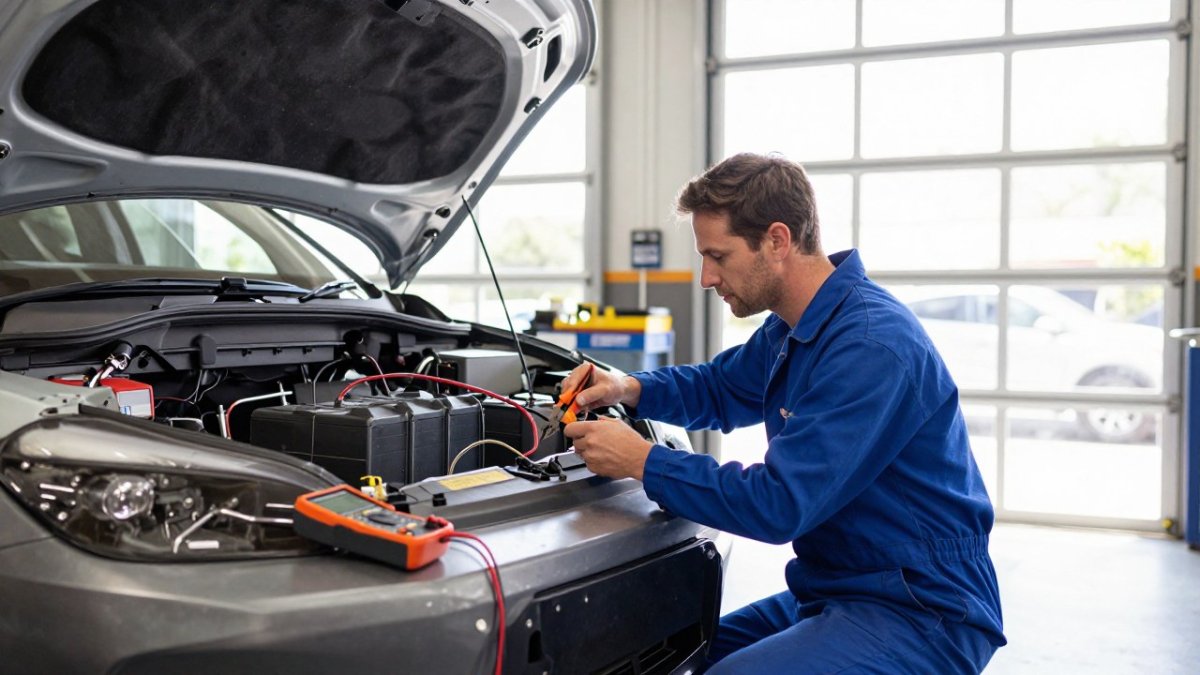
Standard hand tools still earn their place, but EV work adds a layer of equipment you cannot improvise. Insulated tools rated for high-voltage work, a CAT III-rated multimeter, personal protective equipment including insulated gloves, and diagnostic software capable of reading battery management system data all become baseline requirements.
A common mistake is buying the scan tool before the training. Diagnostic equipment only helps if you can interpret what it reports, and misreading high-voltage live data is genuinely dangerous.
The Battery Electric Vehicle Inspection and Servicing Skill Set
The battery electric vehicle inspection and servicing skill set is the shortest recognised pathway into EV work for mechanics who already hold a trade qualification. It bundles the units needed to safely inspect and service electric vehicles without completing a full qualification from scratch.
This skill set suits qualified light vehicle technicians who want to add EV capability quickly. It covers safe isolation procedures, high-voltage system awareness, and the inspection routines specific to battery electric vehicles. For a working mechanic, it is often the most direct route from "no EV experience" to "can be rostered onto EV jobs."
The AURSS00064 Battery Electric Vehicle Inspection and Servicing Skill Set page sets out the units and enrolment details for this pathway.
EV High Voltage Safety Training: What You Must Know Before Touching a Battery
EV high voltage safety training is non-negotiable, and it is the one area where shortcuts cause real harm. Battery packs in modern electric vehicles operate at voltages that can be lethal, and the systems hold residual charge after shutdown. Isolation procedures exist for a reason, and they must be followed in sequence every time.
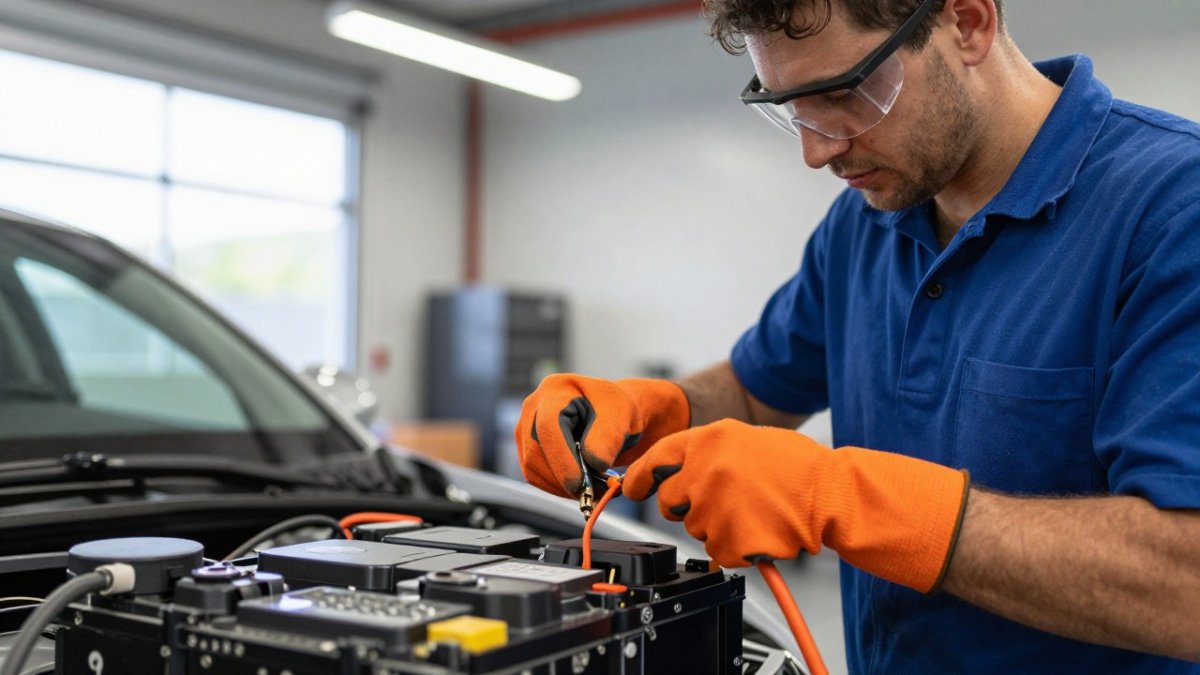
Watch out: the most common serious error is assuming a vehicle is dead because the key is off. Capacitors and pack architecture mean voltage can remain present, and only a verified isolation procedure confirms the system is safe.
Good safety training covers lockout and tagging, correct use of PPE, safe discharge and verification, and the boundaries of what a technician is permitted to do versus what requires a licensed high-voltage specialist. The modern vehicle electronic systems training guide covers diagnostics and high-voltage safety in more depth if you want to go further.
AUR32721 Certificate III in Automotive Electric Vehicle Technology
If you are weighing this against shorter options, our automotive electric vehicle training courses guide compares skill sets, Certificate III pathways and qualification levels side by side.
Choosing an Electric Vehicle Servicing Course for Qualified Mechanics
An electric vehicle servicing course for qualified mechanics should be judged on three things: whether the qualification is nationally accredited, whether the training is hands-on, and whether the provider's equipment reflects current vehicles. Everything else is marketing.
Accreditation comes first. A nationally recognised qualification from a Registered Training Organisation carries weight with employers and with migration assessors. A short course from an unregistered provider may teach useful skills, but it will not appear on a formal record of attainment.
Hands-on delivery comes second. EV work is physical and procedural, and watching videos does not build the muscle memory for safe isolation or correct PPE use. Ask any provider directly how much workshop time you get and on what vehicles.
Training Formats: In-Person, Online and Manufacturer Programs
Three formats dominate, and each suits a different situation:
| Format | Best For | Main Limitation |
|---|---|---|
| In-person workshop | Hands-on skill building, safety procedures | Requires campus attendance |
| Online theory | Background knowledge, flexible study | No practical component |
| Manufacturer programs | Brand-specific systems and procedures | Tied to one marque |
Most mechanics get the best result from a blended approach: theory online where it fits, practical workshop time for anything involving high voltage or diagnostics. Manufacturer programs are valuable once you are working in a dealership, but they rarely substitute for a nationally accredited base qualification.
Our comparison of hands-on workshop training and online theory breaks down the trade-offs in more detail.
Building Your EV Maintenance Training Roadmap
A practical roadmap for EV maintenance training for mechanics looks like this:
- Confirm your base trade qualification. If you already hold a light vehicle Certificate III, you are eligible for skill set pathways.
- Complete high-voltage safety training first. Do this before any practical EV work, not alongside it.
- Add the battery electric vehicle inspection and servicing skill set. This gets you onto EV jobs quickly.
- Consider the Certificate III in Automotive Electric Vehicle Technology if you want EV work as a core career rather than a specialisation.
- Keep learning as systems change. Battery architecture and diagnostic platforms evolve, so refresher training is part of the job now.
The sequencing matters. Skipping straight to advanced diagnostics without the safety foundation is the single most common route to a bad outcome.
Common Mistakes Mechanics Make When Moving into EV Work
The first mistake is treating EV work as an extension of combustion servicing. The systems are different, the risks are different, and the diagnostic logic is different. Experience with engines does not transfer automatically to battery management systems.
The second is underinvesting in PPE and insulated tooling.
Choosing a course on price alone can leave you with theory you cannot safely apply. Ask what is included before you compare fees.
The fourth is assuming all qualifications carry equal weight, so check whether a program is nationally accredited and delivered by a Registered Training Organisation before you compare options.
Enrol in EV Maintenance Training at Swann College
At Swann College, we deliver nationally accredited automotive training through a Registered Training Organisation, with campuses in Sydney and Adelaide and an automotive workshop facility built to reflect a real workplace setting. Our curriculum is developed in association with the Institute of Automotive Mechanical Engineers, which keeps the training aligned with current industry practice.
Our trainers have an excellent hold on their subject, and our workshop facility reflects a real workplace setting.
If you are ready to add EV capability to your trade, complete the enrolment form.
The shift to electric vehicles is already reshaping what workshops need from their technicians, and the mechanics who train early will be the ones workshops compete to hire. Swann College delivers nationally accredited EV training with hands-on workshop time, trainers who know the subject, and a curriculum developed with the Institute of Automotive Mechanical Engineers. Get started with Swann College and build the EV skills your career needs next.
Frequently Asked Questions
What training do mechanics need to work on electric vehicles?
Mechanics need a mix of formal qualifications and safety-specific units. The core is EV high voltage safety training, which covers isolation procedures, PPE and safe shutdown of battery systems. On top of that, a battery electric vehicle inspection and servicing skill set teaches you how to inspect and service EVs without dismantling high-voltage components.
Can a qualified mechanic service electric vehicles?
A qualified mechanic can perform general servicing on EVs, such as brakes, tyres, suspension and cabin filters, but high-voltage work requires additional training. Without EV high voltage safety training you should not isolate, remove or repair battery packs or orange-cabled components.
How long does EV technician training take?
Duration depends on the pathway. A short skill set focused on battery electric vehicle inspection and servicing can be completed in weeks, while the AUR32721 Certificate III in Automotive Electric Vehicle Technology runs over a longer period, typically months depending on delivery mode. Qualified mechanics often start with a targeted short course and add units over time. Part-time and evening options exist for people already working in a workshop.
Do mechanics need high-voltage training to work on EVs?
Yes. EV high voltage safety training is not optional if you intend to work on or around battery systems. High-voltage DC systems can cause serious injury or death, and Even routine tasks like lifting a vehicle or removing a service panel can bring you near high-voltage cabling, so safety training is the first step before any hands-on EV work.
What jobs can you get after completing EV servicing training?
EV servicing training opens roles in dealership service centres, independent workshops, fleet maintenance, mobile mechanic services and specialist EV repair businesses. Some graduates move into workshop supervision or start their own EV-focused mobile business.
What does an electric vehicle maintenance course cover?
An electric vehicle servicing course for qualified mechanics typically covers high-voltage safety and isolation, battery management systems, electric drive motor inspection, charging system diagnostics, regenerative braking and thermal management. It also addresses how to use insulated tools and diagnostic scan tools specific to EVs. Assessment is usually practical, with students working on real vehicles in a workshop environment rather than watching videos.