 listicle
Specialized Short Courses for Mechanics: 2026 Guide
Table of Contents
- Quick Comparison: Specialized Short Courses for Mechanics
- Automotive Diagnostic Training for Modern Fault-Finding
- Manual Transmission Repair Training: Clutch and Gearbox Skills
- Automatic Transmission Repair Training for Complex Systems
- Workshop Safety Training for Mechanics: Compliance and Best Practice
- EV and Hybrid Short Courses for Future-Ready Mechanics
- How to Choose Specialized Short Courses for Mechanics
- Cost, Duration and Funding for Short Courses
- Frequently Asked Questions
Last Updated: October 14, 2026
Quick Comparison: Specialized Short Courses for Mechanics
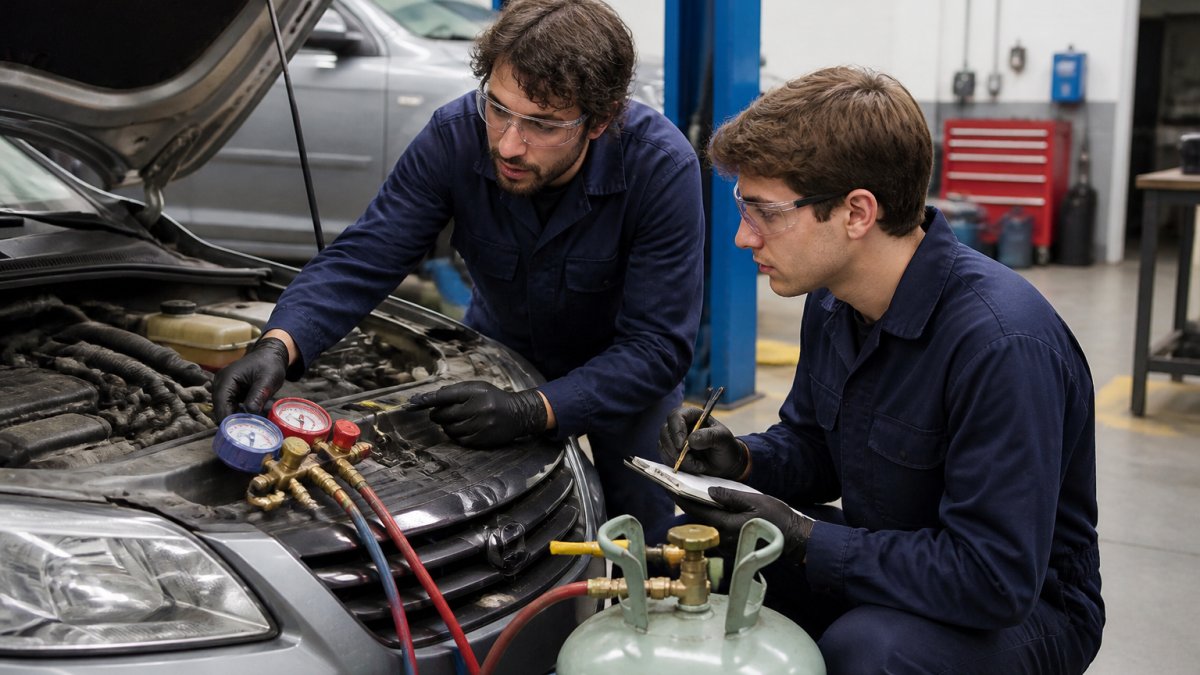
Specialized short courses for mechanics are focused, nationally accredited programs that build one specific skill, diagnostics, transmission repair or EV safety, without the time commitment of a full qualification.
The trade has changed faster than most training pathways. A mechanic who qualified a decade ago now faces hybrid drivetrains, complex electronic control systems and stricter safety obligations, none covered in their original certificate.
Below, we compare the main options, then break down what each teaches, who it suits, and how to choose.
| Course | Core Focus | Typical Duration | Best For |
|---|---|---|---|
| Automotive diagnostic training | Scan tools, live data, fault-finding | Days to weeks | Technicians moving into diagnostics |
| Manual transmission repair | Clutch, gearbox, driveline | Short block | General mechanics broadening skills |
| Automatic transmission repair | Hydraulics, electronic control | Short block | Techs facing modern autos |
| Workshop safety | Compliance, hazard control | 1 day or less | Every workshop employee |
| EV and hybrid | High-voltage safety, systems | Days | Future-ready technicians |
Automotive Diagnostic Training for Modern Fault-Finding
Automotive diagnostic training teaches you to read what a vehicle's electronic systems are telling you, then trace a fault to its source instead of replacing parts by guesswork.
Modern vehicles run dozens of control modules over data networks. A fault code rarely points at the failed component, it points at a symptom.
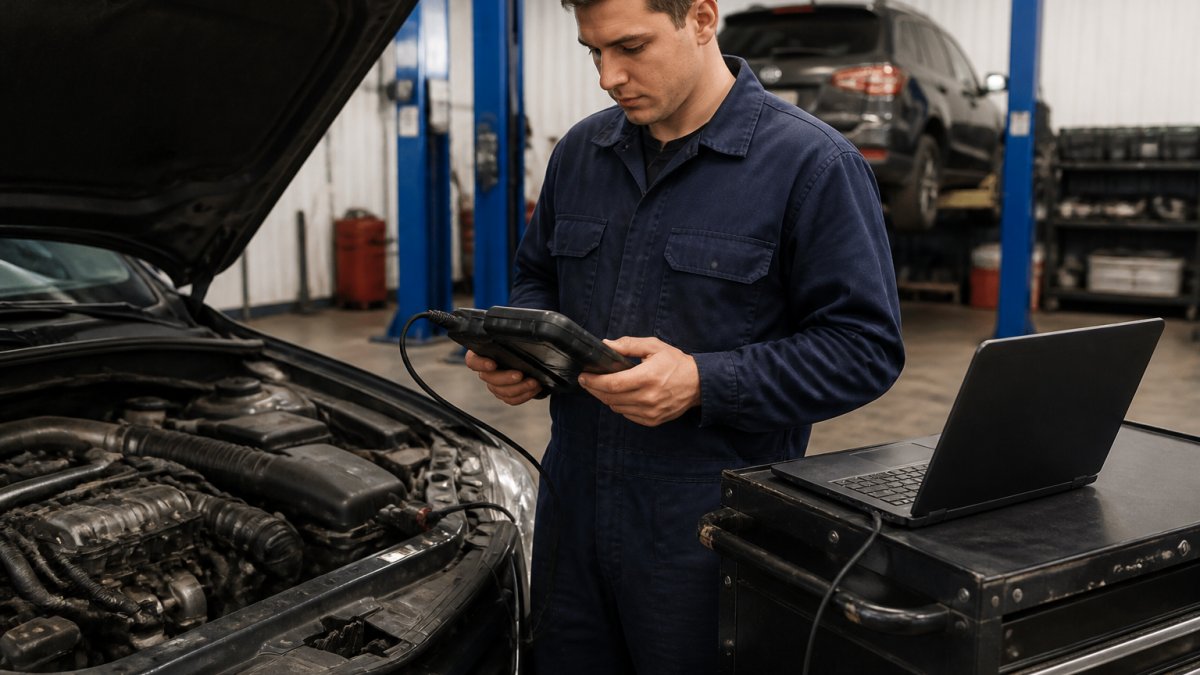
What You Learn in a Diagnostic Short Course
Expect hands-on work with scan tools, oscilloscopes and multimeters on real vehicles.
- Reading and interpreting fault codes rather than acting on them blindly
- Capturing and analysing live data streams
- Using wiring diagrams to trace circuits
The most common mistake is treating a code as a diagnosis. It is a starting point. A course that drills the testing sequence beats one that just lists what codes mean.
Manual Transmission Repair Training: Clutch and Gearbox Skills
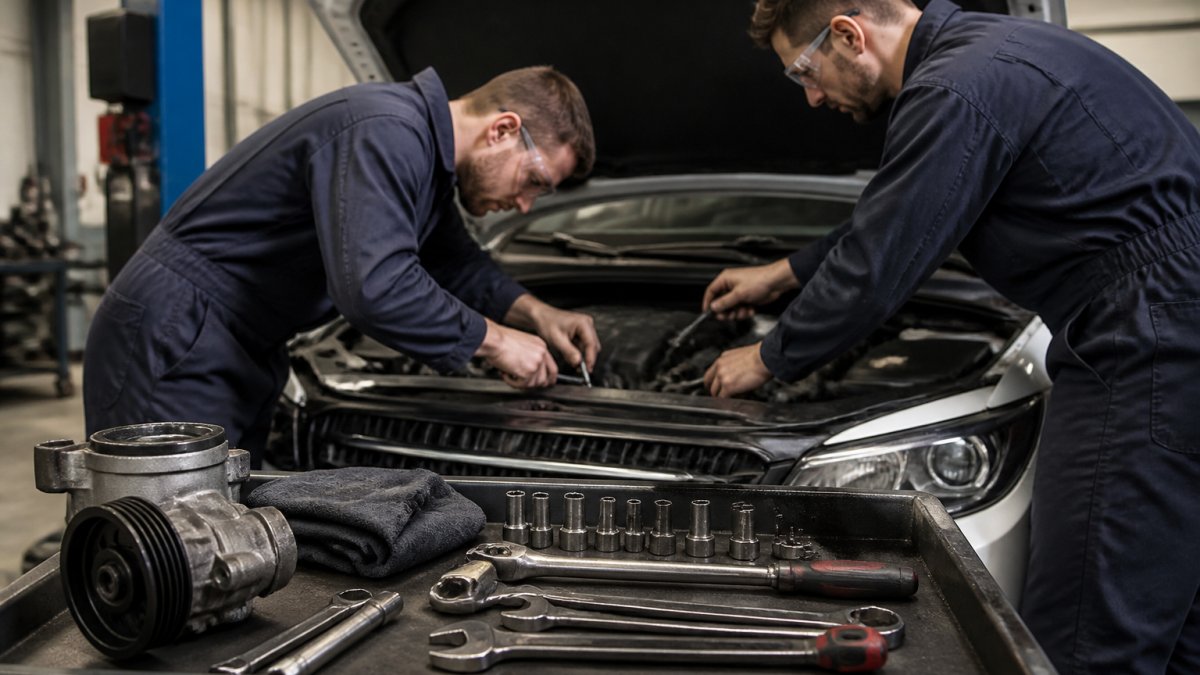
Manual transmission repair training covers clutch operation, gearbox internals and driveline diagnosis. It suits mechanics who want to handle rebuilds in-house, and it remains one of the few short courses where a competent technician can reach a profitable standard in a single block.
Clutch replacement is bread-and-butter work, but diagnosis is where money is made. A worn friction disc, failing release bearing, leaking concentric slave cylinder and worn dual-mass flywheel can all present as similar complaints, slipping under load, shudder on take-up, a vague or heavy pedal.
What You Actually Learn
Expect hands-on work on live vehicles, not bench demonstrations. A well-structured course drills this sequence:
- Clutch inspection and measurement, friction disc thickness against specification, pressure plate diaphragm spring condition, flywheel runout and hot spots, and the decision point between machining and replacement on a dual-mass unit.
- Hydraulic fault isolation, separating a master cylinder fault from a slave cylinder or concentric slave fault using pedal feel, fluid loss and pressure testing rather than parts swapping.
- Gearbox removal and refitting, support procedures, bellhousing alignment, input shaft spline lubrication, and the torque sequences that prevent premature bearing failure.
The Trade-Off Nobody Mentions
Manual gearbox work is declining as the national fleet shifts toward automatics, but it is not disappearing. The vehicles still arriving with manual transmissions, light commercials, older passenger cars, performance models and much of the used import market, are often owned by people who intend to keep them.
Manual gearboxes are also simpler than automatics, making this a sensible re-entry point after time away or a confidence-builder before an automatic transmission course. The diagnostic logic, confirm the fault before you disassemble, transfers directly.
If your workshop sends clutch jobs out, this course stops the leak. If you already do clutches comfortably, skip it and put the money toward diagnostics or high-voltage training.
Automatic Transmission Repair Training for Complex Systems
Automatic transmission repair training focuses on hydraulic control, electronic shift logic and the diagnostic approach modern autos demand. It is the course most experienced mechanics put off, and the one that pays back fastest.
Automatics have moved a long way from vacuum-modulated hydraulics. Today's units are electronically controlled, adaptive and often sealed, which changes what a workshop can do in-house.
Key learning areas include:
- Understanding valve body and solenoid operation
- Interpreting transmission control module data
- Fluid condition assessment and service intervals
Workshop Safety Training for Mechanics: Compliance and Best Practice
Workshop safety training for mechanics covers hazard identification, safe work procedures and the legal duties that apply in a repair workplace. It is short, inexpensive and non-negotiable.
Every workshop operates under work health and safety obligations placing duties on both the business and the individual worker, covering hazardous substances, electrical safety, manual handling, vehicle lifting and emergency procedures.
What a solid safety short course covers:
- Hazard identification and risk assessment in a workshop setting
- Safe use of hoists, jacks and lifting equipment
- Chemical and fuel handling, storage and disposal
Safety training is often the difference in an insurance or regulatory investigation. Documentation matters as much as knowledge.
EV and Hybrid Short Courses for Future-Ready Mechanics
EV and hybrid short courses teach the high-voltage safety practices and system knowledge required to work safely on electrified vehicles.
The critical distinction is that high-voltage systems can kill. De-energising procedures, insulated tooling, PPE and isolation verification are not optional extras, they are the core of the course.
Typical content includes:
- High-voltage system layout and component identification
- Safe isolation and verification procedures
- Battery pack handling and thermal risk awareness
This is where choosing a provider matters most. Trainers need current industry experience, not a slide deck written five years ago.
How to Choose Specialized Short Courses for Mechanics
Choose a short course by matching it to your skill level, career goal and the work your workshop turns away. The right course removes a bottleneck, not the one with the longest topic list.
Audit what you currently refer elsewhere. If you send diagnostics out, that is your first course. If you avoid hybrids entirely, that is your second.
Use this checklist when evaluating any provider:
- Is the provider a Registered Training Organisation delivering nationally accredited courses?
- Does the course include hands-on workshop time on real vehicles?
- Are trainers currently active in the industry?
Swann College delivers accredited automotive training from campuses in Sydney and Adelaide, with a workshop built to reflect a real workplace. Our curriculum is developed with the Institute of Automotive Mechanical Engineers, so what you learn matches current practice. For mechanics who need a specific certification, our short courses are structured around the skills employers ask for.
Cost, Duration and Funding for Short Courses
Short-course pricing follows predictable patterns once you understand what drives it, and knowing those patterns lets you budget before you make a single phone call.
What Drives the Price
Four factors account for almost all of the variation between providers:
- Accreditation status. A nationally recognised unit of competency delivered by a Registered Training Organisation costs more to deliver than a non-accredited awareness session, because the RTO carries assessment, record-keeping and compliance obligations. The non-accredited course is cheaper and often not recognised by employers or insurers.
- Workshop hours. A course with substantial hands-on time on real vehicles costs more than a classroom or online equivalent. This is the single biggest driver of price differences between providers offering the same nominal topic.
- Consumables and tooling. Diagnostic courses that use oscilloscopes, live-data scan tools and breakout boxes, and high-voltage courses that supply insulated tooling and PPE, carry higher material costs than a compliance course delivered in a meeting room.
Typical Duration by Course Type
Duration is more predictable than price. As a general guide:
| Course type | Typical duration |
|---|---|
| Workshop safety and compliance | One day or less |
| High-voltage / EV safety awareness | One to two days |
| EV and hybrid system training (with practical) | Two to five days |
| Automotive diagnostics (scan tool and live data) | Two to five days |
| Manual transmission / clutch | Short block, typically two to four days |
| Automatic transmission | Short block, typically three to five days |
| Skill sets delivered part-time | Several weeks to a few months |
Skill sets, clusters of units drawn from a full qualification, are the longest option because they carry formal assessment across multiple units. They are also the most portable credential if you intend to move between employers.
Funding and Subsidies
Subsidised training places are administered by state and territory training authorities, and eligibility rules differ between jurisdictions. Common factors include residency status, prior qualification level, employment status and whether the course sits on the relevant state priority list. Because criteria and amounts are reviewed regularly, the only reliable source is the current guidelines from your state or territory training authority.
Two practical points most providers will not volunteer:
- Subsidy does not always mean cheapest. A subsidised place at a provider with limited vehicle access may cost you more in lost learning than an unsubsidised place at a better-equipped one.
- Payment plans are common but not universal. Ask whether the provider offers instalments, and whether the fee is refundable if you withdraw before the practical component.
Additional Costs to Budget For
Tuition is rarely the whole cost. Allow for:
- Personal protective equipment if not supplied, safety boots, eye protection, and for high-voltage work, appropriate insulating gloves.
- Textbooks, online resources or assessment fees charged separately.
- Travel and accommodation if the course is only delivered at a distant campus.
How to Compare Two Quotes Properly
When you have two quotes in front of you, compare them on these five lines rather than on the headline figure:
| Line item | What to confirm |
|---|---|
| Total fee | Inclusive of materials, assessment and certification |
| Contact hours | Split between classroom and hands-on workshop time |
| Vehicles and equipment | How many students per vehicle, and what tooling is used |
| Outcome | Statement of attainment, skill set, or non-accredited certificate |
| Delivery mode | Face-to-face, blended, evening, weekend or block release |
A quote that is 20 per cent cheaper but halves your workshop time is not cheaper. It is a different product.
The Australian Skills Quality Authority maintains a public register of Registered Training Organisations and the scope of courses each is approved to deliver. Searching that register takes a few minutes and is the fastest way to confirm that the course you are considering will actually be recognised.
Frequently Asked Questions
What short courses can qualified mechanics take to upskill?
Qualified mechanics can take specialized short courses in automotive diagnostic training, manual and automatic transmission repair, workshop safety, EV and hybrid systems, and air conditioning. These courses typically run under four months and focus on practical, hands-on skills. Nationally recognised skill sets are available through registered training organisations, and many providers offer flexible delivery for working mechanics.
Are automotive short courses nationally recognised?
Yes, many automotive short courses are nationally recognised when delivered by a Registered Training Organisation. These courses align with the Australian Qualifications Framework and industry standards. Always check that the provider is an RTO and that the course leads to a statement of attainment or skill set that employers recognise. Swann College, for example, delivers nationally accredited automotive training.
How long do automotive short courses take?
Most specialized short courses for mechanics take between a few days and under four months, depending on the topic and delivery mode. Diagnostic and safety courses often run for 2 to 5 days, while transmission or EV courses may span several weeks. Full qualifications like the Certificate III in Light Vehicle Mechanical Technology take 12 to 24 months, but short courses are designed for quick upskilling.
Can new mechanics train in manual and automatic transmission repair?
Yes, new mechanics can enrol in manual transmission repair training and automatic transmission repair training as short courses. These courses cover clutch systems, gearbox operation, fault-finding, and repair procedures. They are suitable for apprentices, career-changers, and technicians wanting to specialise. Prerequisites vary; some courses assume basic mechanical knowledge while others start from fundamentals.
How much does a specialized short course for mechanics cost?
Course costs vary based on the provider, duration, and whether the training is nationally recognised. Pricing depends on factors like course materials, workshop access, and assessment. Some courses may be eligible for funding or payment plans. For current fees and funding options, contact Swann College directly or check their website for a personalised quote.
The real challenge is not finding a course, it is choosing one that actually changes what you can do in a workshop. Swann College delivers nationally accredited automotive training from campuses in Sydney and Adelaide, with a workshop facility that mirrors a real workplace, trainers with current industry experience, and curriculum developed in association with the Institute of Automotive Mechanical Engineers. Get started with Swann College and build the specialised skills your next role demands.